
Can a Chiropractor Help With Scoliosis? What It Can Really Do
You have been told your spine curves to one side. Maybe you noticed it in the mirror, or a doctor pointed it out on an X-ray years ago. Either way, the morning stiffness and the dull ache that builds through the day have started to change how you move, sit, and even sleep.
So now you are wondering whether a chiropractor can help with scoliosis, or whether you are stuck dealing with it alone.
The realistic answer is that chiropractic care will not straighten the curve, but it can do a lot for the pain, stiffness, and movement limits that come with it. A plan that combines adjustments, functional rehabilitation, and massage therapy, built around your specific curve rather than a fixed protocol, is where the value lies.
In this guide, you will learn what chiropractic care can actually offer for scoliosis, where its limits are, which types of scoliosis respond best, and how rehab exercises and supportive therapies fit in. Knowing what is realistic before your first appointment puts you in a much better spot to make decisions about your care.
How a Chiropractor Helps With Scoliosis Pain and Stiffness
Chiropractic care for scoliosis mostly helps with the pain, stiffness, and movement issues that come from living with a curved spine. It will not straighten the curve itself, and anyone promising that should be questioned.
Pain Relief, Mobility, and Daily Function
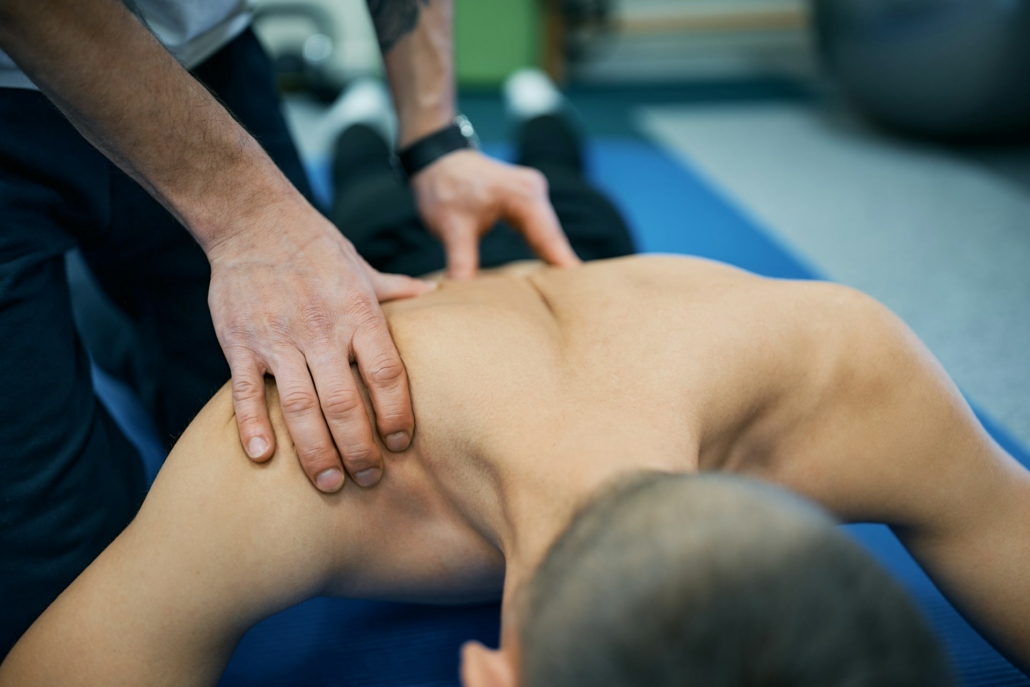
Most adults come in because scoliosis gives them chronic back pain. Spinal manipulation, the hands-on technique where a chiropractor applies a controlled force to a spinal joint, can restore motion to joints that have stiffened because of the curve. The goal of a chiropractic adjustment is to improve how the spine moves and reduce pain without medication or surgery.
When joints in the mid or lower back stop working as they should, nearby muscles pick up the slack. That brings tension, soreness, and sometimes nerve irritation, where pressure on a nerve causes tingling, numbness, or radiating discomfort. Adjustments can take some of that pressure off and let those overworked muscles settle.
For many people, this means better flexibility, less daily stiffness, and more comfort overall. It can get easier to sit through work, exercise without favoring one side, or sleep without waking up sore.
Why Symptom Relief Does Not Mean Curve Correction
A structural curve that has been there for years will not reverse with adjustments alone. The bones, discs, and ligaments have adapted to it. One small study found that some techniques reduced the Cobb angle, the measurement of curvature, in the short term, but there is no strong evidence that spinal manipulation permanently straightens a scoliosis curve.
That distinction matters. Chiropractic care for scoliosis works best when the aim is functional: move better, hurt less, and keep your body performing as well as it can around the curve you have.
When Short-Term Relief Can Still Be Meaningful
Even if the curve does not change, consistent relief from scoliosis pain is worth a lot. Chronic back pain that keeps you from walking, exercising, or working wears you down in more ways than one.
Short-term relief after each visit can add up. Many people find that regular chiropractic adjustments combined with home exercises cut down how often pain flares and how intense those flares are. Sometimes that is enough to make conservative care a solid option before considering more invasive treatments.
But first it helps to understand what scoliosis is, since the type of curve you have changes what kind of care makes sense.
What Scoliosis Is and Why the Type Matters
Scoliosis is a sideways curve of the spine that measures 10 degrees or more on an X-ray. Not all curves act the same, and the type you have shapes what kind of care works best.
Spinal Curvature, Cobb Angle, and How Scoliosis Is Measured
Doctors use the Cobb angle, calculated from an X-ray, to see how far the spine curves from normal alignment. A curve is officially scoliosis when it reaches 10 degrees or more.
- Mild scoliosis: Cobb angle between 10 and 25 degrees
- Moderate scoliosis: Cobb angle between 25 and 40 degrees
- Severe scoliosis: Cobb angle above 40 degrees
A mild curve might barely cause pain and may just need monitoring. Moderate and severe curves are more likely to cause noticeable symptoms and sometimes need bracing, rehab, or surgery.
Functional Scoliosis Versus Structural Scoliosis
The difference between functional and structural scoliosis really shapes your options.
Functional scoliosis means the spine itself looks normal, but muscle imbalances, a leg-length difference, or habits pull it into a curve. Since the bones and discs are not permanently changed, this type often responds well to chiropractic adjustments and corrective exercises.
Structural scoliosis involves changes to the vertebrae, discs, or both. The curve is fixed and does not straighten when you bend forward or change position. Chiropractic care can still help with pain and stiffness around a structural curve, but the curve itself stays.
Idiopathic, Degenerative, Congenital, and Neuromuscular Patterns
Most cases fall into one of four categories:
| Type | What Causes It | Who It Affects Most |
|---|---|---|
| Idiopathic | Unknown cause | Children and adolescents (most common type) |
| Degenerative | Wear and tear on spinal discs and joints | Adults over 50 |
| Congenital | Spinal bones form incorrectly before birth | Infants and children |
| Neuromuscular | Nerve or muscle conditions like cerebral palsy | Children with neurological conditions |
Adolescent idiopathic scoliosis makes up about 80 percent of diagnosed cases. Degenerative scoliosis is the kind most adults bring to chiropractic offices, since the curve develops slowly as discs and joints change with age.
Knowing your type helps a chiropractor figure out whether conservative care, rehab, or a referral for imaging is the right move. Catching the signs early makes that conversation more useful.
Signs, Symptoms, and When to Get Evaluated
Most people notice postural changes or ongoing discomfort before they ever see a curve on an X-ray. Spotting these signs early gives you more options.
Common Signs Such as Uneven Shoulders and a Rib Hump
The visible signs of scoliosis usually appear slowly. You might see one shoulder higher than the other, one hip sticking out, or an uneven waistline in the mirror. A rib hump, where one side of the rib cage sticks out more when you bend forward, is another classic sign.
Often the small things give it away first: a shirt that never sits right on one shoulder, a bag strap that keeps sliding off the same side, or a lean to one side that you feel most by the end of the day.
These postural changes can seem minor at first, but over time they can affect how your clothes fit, how you stand, and even your balance.
How Muscle Imbalances and Postural Changes Can Drive Discomfort
When the spine curves, the muscles on each side work unevenly. On the inside of the curve, the concave side, muscles tighten and shorten. On the outside, the convex side, they stretch and weaken. This imbalance creates chronic muscle tension that can feel like a deep, stubborn ache.
Over time, these imbalances can lead to:
- Constant tightness between the shoulder blades
- Lower back soreness, especially after sitting
- Fatigue when standing or walking
- Trouble taking a full breath, if the curve is in the mid-back
- Less range of motion when twisting or bending
Dry needling can release those stubborn trigger points, the tight knots that develop from chronic compensation. Pairing it with therapeutic massage eases the tension that builds up between adjustment visits.
When Back Pain May Point to Something Beyond Scoliosis
Not every back pain in someone with scoliosis comes from the curve. Disc herniations, spinal stenosis the narrowing of the spinal canal, and unrelated conditions can cause similar symptoms. If your pain is getting worse, spreading into your legs, or comes with numbness or weakness, get a thorough evaluation.
A back pain evaluation can help sort out whether your symptoms come from scoliosis, a different condition, or a mix of both. That distinction shapes every next step, including whether you need rehab, bracing, or a referral.
Where Rehabilitation and Supportive Care Fit In
Rehabilitation goes beyond pain relief and aims for lasting improvement. Exercises, manual therapy, and monitoring all play a part.
Scoliosis-Specific Exercises and Core Strength
Targeted exercises for scoliosis focus on rebalancing the muscles around your spine. Unlike general fitness routines, these address your specific curve pattern, strengthening weak muscles on one side and stretching tight muscles on the other.
Core strength matters here, since your deep abdominal and back muscles act as a natural brace for the spine. When they are strong and coordinated, they support your posture and make daily tasks more comfortable.
At Precise Chiropractic & Rehabilitation, functional rehabilitation combines corrective exercises with lifestyle guidance so the work you do in the clinic carries over to how you move at home and at work.
How Physical Therapy, Rehabilitation, and Massage Therapy Support Function
Rehabilitation for scoliosis is not a single treatment. It is more of a blend, with different approaches coming together depending on what your body needs.
| Modality | What It Targets | How It Helps Scoliosis |
|---|---|---|
| Functional rehabilitation | Movement patterns and muscle balance | Restores symmetry, builds core support |
| Massage therapy | Muscle tension and soft tissue restrictions | Reduces tightness caused by compensating |
| Dry needling | Trigger points and deep muscle knots | Releases persistent tension that stretching cannot reach |
| Chiropractic adjustments | Joint mobility and spinal alignment | Improves motion in restricted spinal segments |
To see how these pieces connect, it helps to understand what physical rehabilitation involves. The aim is not to straighten the curve but to help your body work at its best with the curve you have.
Bracing, Monitoring, and When Surgery or Spinal Fusion May Be Part of Care
For teens with moderate curves that are worsening, bracing can slow or stop further bending during rapid growth spurts. Custom scoliosis braces like the ScoliBrace apply gentle pressure while the spine is still developing.
Adults with severe scoliosis, usually curves over 40 or 50 degrees that bring serious pain, breathing trouble, or nerve issues, might need spinal fusion surgery. In this procedure, a surgeon connects two or more vertebrae to stabilize the spine.
Conservative care and surgery are not rivals. They sit on a spectrum, and many people find value in chiropractic care and rehab before surgery, to build strength, or after, to support recovery.
How to Decide Whether Conservative Care Makes Sense for You
To figure out whether chiropractic care fits your situation, you will want a thorough evaluation that looks at your curve type, your symptoms, and how scoliosis affects your daily life.
What a Chiropractic Exam May Include
A chiropractic exam for scoliosis usually starts with your health history, including prior imaging, diagnoses, and treatments. The hands-on part might include checking your posture, how well you move, and orthopedic tests to see whether nerves or muscles are affected.
If you have not had recent X-rays, the chiropractor might suggest imaging to measure the Cobb angle and rule out other spinal issues. That information shows whether adjustments and rehab make sense or whether a referral is the better move.
Knowing what to expect at your first visit can make that first appointment a lot less nerve-wracking.
Questions to Ask Before Starting Care
Before you start any scoliosis treatment plan, ask questions like:
- What type of scoliosis do I have, and how does that affect my options?
- Are you treating the pain and function, the curve, or both?
- How will progress be measured, and how often?
- Will my plan include exercises I can do at home?
- At what point would you recommend I see a specialist?
These help you see whether the provider is being upfront about what conservative care can and cannot do. A doctor of chiropractic who answers directly and does not overpromise is worth your trust.
A Practical Next Step for Adults in Crofton and Nearby Areas
Scoliosis pain is a good reason to start a real conversation about your options. If you live in Crofton, Bowie, Odenton, or Gambrills and pain from scoliosis has been interfering with your day, a chiropractic consultation in Crofton is a low-pressure way to see what is possible for you.
Frequently Asked Questions
Can Chiropractic Care Make Scoliosis Symptoms Worse or Speed Up Curve Progression?
When a licensed, experienced chiropractor handles your care, spinal adjustments for scoliosis are considered safe and do not speed up curve progression. Techniques are tailored to your curve pattern, and a good provider avoids aggressive moves where they are not appropriate.
What Improvement Should I Realistically Expect From a Personalized Plan for Mild Scoliosis?
If your scoliosis is mild, with a Cobb angle under 25 degrees, most people notice less pain, better flexibility, and easier movement in daily life. The curve probably will not straighten, but you might feel and move a lot better after a few weeks of steady care.
How Do Chiropractors Evaluate and Measure Scoliosis, and When Is Imaging Recommended?
A chiropractor checks posture, range of motion, and spinal alignment by hand and eye. If you do not have current X-rays, or something in the exam suggests a curve that needs measuring, they will recommend imaging to get an accurate Cobb angle and plan your care.
Is Chiropractic Care Appropriate for Adults With Scoliosis-Related Back Pain and Stiffness?
Yes. Most adults who seek chiropractic care for scoliosis are dealing with pain, stiffness, or reduced mobility, not a curve that is still worsening. Adjustments, dry needling, and rehab exercises can help manage these symptoms as part of a non-surgical approach.
Can I Receive Chiropractic and Rehabilitation Care After Scoliosis Surgery, and What Precautions Matter?
Chiropractic care after spinal fusion needs extra caution. The fused part of the spine should not be adjusted, but the areas above and below often get stiff and respond well to gentle techniques and rehab. Always tell your chiropractor about the surgery before starting care.
What Should I Look for in a Local Scoliosis-Focused Chiropractor in Crofton, Bowie, Odenton, or Gambrills?
Look for someone with advanced certifications, experience with musculoskeletal cases, and a willingness to be clear about what chiropractic can and cannot do for your curve. A clinic that combines adjustments with functional rehabilitation and soft tissue therapy offers more options than adjustments alone.
Your Scoliosis Does Not Have to Define How You Move
Living with scoliosis does not mean you have to accept daily pain or give up the things you love. Chiropractic care, combined with rehab and realistic expectations, can ease discomfort, improve movement, and help you get on with your life, even if the curve does not change. The important part is working with someone clear about the goal: less pain and better function, not empty promises about a perfectly straight spine.
If back pain or stiffness from scoliosis has been slowing you down, you deserve a clear answer about whether conservative care could help. Request an appointment with Precise Chiropractic & Rehabilitation for a plan built around your needs, or call (410) 370-0600 to set up your consultation. Dr. Hands and the team are here when you are ready.



Leave a Reply
Want to join the discussion?Feel free to contribute!